
PocketForestsOregon.com
Exactly how to plant
any size native plant Miyawaki method forest, because:
Native plants and trees planted close together:
will help to make you Happier and Healthier.
Help to Cool your environment, and
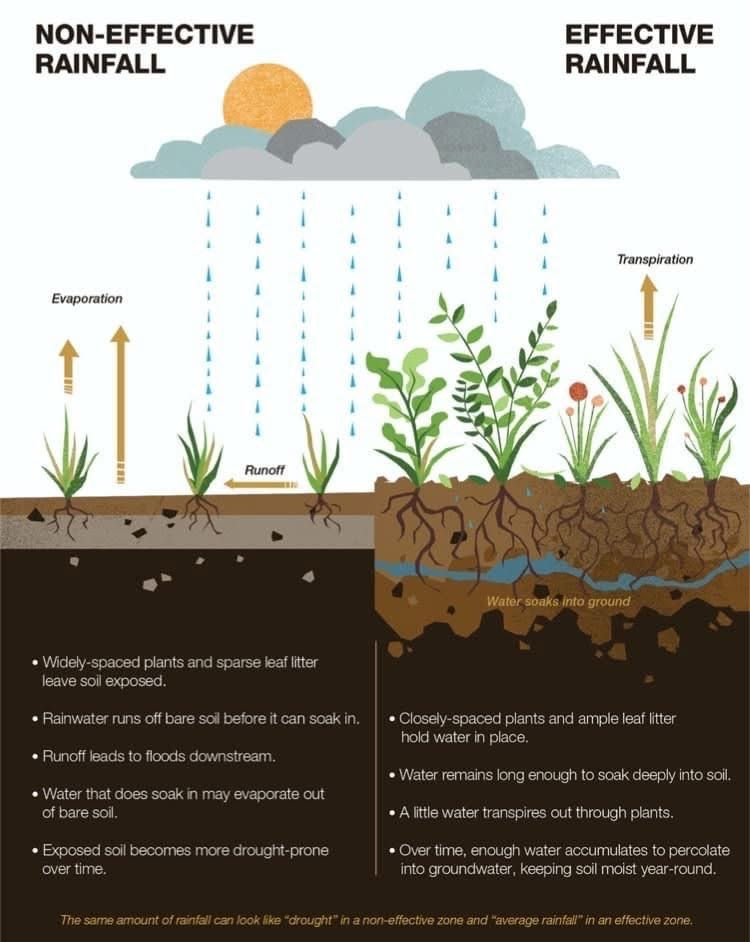
restore Living Soil and Water Cycles,
for a Healthier Planet.

All the information YOU NEED is here in FREE 4 downloadable, and printable PDF's, to help plant a small 6 ft X 10 ft, or larger Miyawaki Method/Pocket forest.
There is also a FREE downloadable book by Basil Camu, called from wasteland to WONDER, that can help explain why this is SO IMPORTANT. A hardbound copy is also available at cost for $10.75, by using this link: https://www.leaflimb.com/wonder/
Two movies are available that will help to motivate your work:
1. A free movie on YouTube, 'How to Live on Earth', presented by Benedict Cumberbatch, on how we must learn to live with NATURE, instead of working against NATURE, if we are to solve our climate crisis?
2. 'Regenerating Life', presented by John Feldman and many soil scientists on the successful biological solutions to climate change. Sponsored by the group Bio4Climate.org. A film, available on Vimeo, and Amazon Prime for a $5.99 rental.
The loss of 40-60% of the world's original native forests around the world needs Oregon's, and everyone's help. Join our Group in the section below. We don't write regular newsletters, only help you plant your native forest, with the best information, and video information, when we are contacted. And after planting your native forest, you will note how little watering or weeding is required. And in just 3-4 years, virtually no maintenance at all is required. While all this time your biodiverse, and native forest will be holding on to water, cooling your neighborhood environment, and giving you long proven positive health benefits from spending time in a natural setting.
Pocket Forests Oregon's Group is dedicated to helping all who want to actively heal the earth's soil, water, and weather cycles. This includes the soil in our backyards, neighborhoods, on local businesses and church properties, within cities, and on school grounds 'as natural outdoor classrooms'. We are utilizing the 50 year old, successful method developed by the botanist
Akira Miyawaki. We combine this technique with modern 'pocket forest' techniques presented by leaflimb.com, in the free downloadable book pictured below, and explained above, linked to downloading on our front page. Our methods can be applied to many ecoregions of the United States as well.
Our goals are clear, and evidence based, on international standards:
1. Everyone should be able to see at least three trees from their home.
2. Every neighborhood should have at least 30% tree canopy cover.
3. Everyone should live within 300 meters of a high-quality green native plant and tree space suitable for recreational activities.
We are encouraged by the speed at which these small forests in Oregon grow. They quickly
reach a climax like state in 10-15 years of growth, and need little or no maintenance, even in
their first 3 years of growth. A small forest that would take nature alone 100-200 years to create.
This form of planting forests has now become 'a Mini-Forest Revolution', that is successful all over the world, in many ecoregions, as described in the book by Hannah Lewis, and obtainable
at your local library.
A look inside a 3 year old Miyawaki/Pocket forest
planted at Catlin Gabel School.
And a beautiful 1 1/2 yr old Teaching Miyawaki/Pocket Forest in Gresham, Oregon,
open to the public for FREE TOURS, M-F by appointment
SustainableEconomiesNW@gmail.com




1. A Free Downloadable PDF 1, is located below on the fundamentals of site assessment, the 'soil look, feel and smell' observation, and a mason jar soil testing link instructional, that tells you which type of soil that you are starting with. Having some soil compaction is not a problem, once the biological advantages of these native plants are rooted
into your amended soil, in this dense planting method of the Miyawaki/pocket forest.

Planting even a small native forest, restores life to the earth's soils, that has been lost by deforestation. And when you plant trees and shrubs native to your ecoregion, with native understory, and herbaceous layers, you are increasing the intertwining of roots. Thus restoring the billions and billions of microbes, and fungal networks that hold water and carbon in the soil, for a continued balance of our water, and weather cycles.
2. A free downloadable PDF 2, is located below, on the various different methods of removing grass, and adding soil amendments. We recommend for ease of soil preparation and planting, using the simpler method of compostable paper product, topped with composted manure, and well composted yard waste, with 1 gallon plant containers for the ease of yourself (or volunteers who are helping plant your forest). You can also listen to a well explained video that is approximately 92 minutes, of 3 methods featured on the East Multnomah Soil and Water Conservation District site on lawn removal (including weed control and other questions): https://emswcd.org/ then navigate to Events in Menu, then Recorded Webinars, and find 'Converting Lawn into Planting Space, on this site to view this video (or others you may be interested in knowing more about?).
You may use arborist's wood chips, an example from Basil Camu's book listed above, as we note in this PDF. However these can take much longer to degrade with the soil, you need to wait up to 6 months, sometimes longer. And they can be difficult for your workers to plant in, if the soil is not wet enough. Basil Camu also recommends using smaller saplings for this method, which may be slower growing, or more fragile for yourself or volunteers to handle, although less expensive.
We included in this PDF a picture of a small two year old 'Backyard Forest', anyone can plant inexpensively. It is only 6 ft X 10 ft, with 20-26 differing native tree and plant species. An ideal size for a small yard, or outdoor classroom in a nearby school or church yard.
3. A free downloadable PDF 3, is located below, including a list from OSU and the Portland Plant List, which helps you choose the best native trees and plants, that are suited for your ecoregion. Approximately 10-15 % canopy trees (only if you have the space), 40-50 % understory trees (include more if there are no canopy trees), 25-30% shrub layer, and 8-12 % ground layer (herbaceous layer). Remember to include a number of keystone species for your ecoregion in Oregon, including: Garry Oak, Huckleberry/Blueberry, Scouler's Willow, Bitter Cherry, and Chokecherry. By their definition, keystone species support a higher number of other species of life in the soil/food web, improving the soil biome, holding more water and carbon, and fungal networks.
You can shop at retail Nurseries for small native forests, or order online from wholesale sites (if possible). If you order a higher volume of 1 gallon pots, your forest will likely yield the quickest growth results in the Miyawaki method of close planting: 3 plants per sq yd/ or 4-6 plants in a 4 ft X 5 ft area. You can call Native Plant Nurseries as well with questions, and order online, checking on the best times to order for the greatest selection. Some local nurseries let you recycle your pots, but not all.
4. A free and simple downloadable PDF 4, is located below, featuring a selection of species for Oregon’s Willamette Valley ecoregion. PocketForestsOregon.com used this list successfully to create a forest of 36 different species, in just 600 sq ft, pictured above after only 1 1/2 years growth. This list explains native tree and plant heights, along with other characteristics. A list that can be useful in Portland, Salem, and Eugene, among other cities in this ecoregion. This list can also be useful for small forests on city lots, that only have room for understory trees, shrubs, and herbaceous layers. It can be useful for planting native plants as a privacy forest between properties, or as an intercropping between agricultural fields as well.
5. Planting 'Pollinator Pathways' can also increase soil health in a very small space. Note that the longer rooted meadow plants hold the greater amounts of water and carbon. Mowed lawns are not very helpful at all...
FREE instructions are available from BackyardHabitats.org.
Download https://backyardhabitats.org/wp-content/uploads/2017/07/Parking-Strip-Manual.pdf.
Included here is also a link explaining how you can still plant a selection of shorter rooted grassland plants over a septic drainage system https://www.youtube.com/watch?v=u5y64if94hk
All Instructions for Planting Your Own Small or Larger Pocket Forest are FREELY DOWNLOADABLE for learning in order
from PDF symbols BELOW: 1, 2, and 3
PDF 4 is a simple list, including plant heights, of biodiverse native plants and trees from the Willamette Valley ecoregion, or Oregon including: Portland, Salem, and Eugene on the map below.


Note that turf lawns (noted with red arrow), are the least effective at retaining soil moisture, and soil health with living organisms..

Join our Group
Feel free to contact us for any questions you have about these 4 PDF instructions for planting Miyawaki method/pocket native forests?
The following link, gives you a more precise map for all the ecoregions of Oregon:
https://swap.oregon.gov/ecoregions/
We encourage you to join our group to help afforest the lost 40-60% of our once native forests, that helped to cool our environment, improve water infiltration, reduce runoff of water, are areas more resistant to drought and fire, help to stabilize our weather patterns, help to increase carbon and fungal networks in our soils, help to increase living microbes in our soils, require very little maintenance for these benefits, and provide health benefits when time is spent inside them.
If you live outside of Oregon, look around you and you may still be able to manage planting a native forest in your neighborhood like we did!
Anne & Rolf Nesse, Co-Directors PocketForests
Oregon.com

FREE Tours and information about our Oregon based Miyawaki/Pocket Forests are available by contacting: SustainableEconomiesNW
@gmail.com
